
Capitalizing On Your Natural Expressive Comedy Traits (What Makes You Funny To Begin With)
Training Module 2: Intro And Lesson Links | Members Area
Begin
Introduction
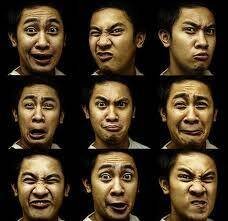 Psychologists have determined that by the ripe old age of 16 or so, individuals have the fully developed sense of humor they are going to use for the rest of their lives.
Funny individuals in everyday life not only have a well developed sense of humor, but they have also developed what I can only describe as a skill set of natural expressive comedy traits which helps them communicate their sense of humor.
Natural expressive comedy traits are the primary reason naturally funny individuals are able to generate laughs during casual conversations at work, party events, social functions and family gatherings.
The natural expressive comedy traits that an individual uses effortlessly and without premeditation are as unique as a fingerprint and help to form an individual’s unique “character” as they are perceived by others.
These traits represent a communication synergy between the words an individual uses and the meaning, value, context, purpose and intent of the words as they are being expressed.
These natural expressive comedy traits include, but are not limited to:
- Overall attitude, demeanor and affect (expression of feeling or emotion)
- Outward appearance and posture
- Diction, dialect, and accent
- Baseline speech rate and speaking rhythm
- Confidence level
- Sayings, analogies, and metaphors consistent with where you live or grew up
- Unique and personal characterizations of other people
- Unique word combinations or phrase usage
- Body language
- Facial expressions
- Eye contact
- Natural comedic timing/pause management
- Voice tone, pitch and speed variations
- Natural use of the element of surprise
While it is not necessary to know or identify every single expressive comedy trait that you use naturally may be, here’s what you do need to know that is important as it relates to developing stand-up comedy material that works well for you…
Part 2
What You Need To Know About YOU
It will always be your expressive comedy traits that give your words the vast majority of their laughter generation power — not the other way around.
Words alone amount to just a mere 7% of the communication anytime the spoken word is used — whether it be with friends, family, co-workers and acquaintances or when delivering stand-up comedy material on stage.
Your expressive traits, which accompany your words, provide a whopping 93% of the information conveyed when you communicate verbally.
Another way to look at this — it is your expressive traits that overwhelmingly dictate not only the intent of your words, but also the listener’s (or audience’s) interpretation of your words.
Again, it is your already developed expressive comedy traits that give what you have to say its true comedic power — whether it be in a casual conversation or when delivering a stand-up comedy monologue.
Now, let’s take a quick look at another reason why “conventional” stand-up comedy “joke writing” is so difficult and why the system you are in the process of learning makes it much, much easier when you are developing comedy material that actually works on stage.
Part 3
The Missing Ingredient
A major problem with conventional joke writing is that it focuses primarily on written words and sentences. The formal way we are taught to write creates jokes that are designed to be “read”, but not performed. These “jokes” thus are created without any regard to the non-verbal natural expressive comedy traits which give a person’s words the overwhelming majority of their comedic power.
Trying to develop powerful stand-up comedy material using only written words and sentences is like trying to bake a cake but the only ingredient you have is the eggs — the other ingredients are missing.
When you do that, you end up with scrambled eggs every time.
But there’s another problem as well…
When we communicate verbally, we use far fewer words because our expressive traits make up the bulk of the information we are actually communicating.
When we “write”, we are confined to the single dimension of written words alone, devoid of the visible and audible expression used to augment the true intent, meaning and context of those words.
The result — many more words are required when “writing” to convey the same information as verbal communication. Conversely, verbal communication because it combines 3 synergistic channels of communication namely words, sight and sound, requires far fewer words to convey the same information.
By its nature, headliner stand-up comedy material demands an economy of words in order to get to the punchlines quickly and frequently during a stand-up routine.
Well, that economy of words is only possible if your natural expressive comedy traits are factored directly into the development of your stand-up comedy material — right from the beginning.
You should be aware that most stand-up comedy material does not read “funny” from a piece of paper. The absence of expressive comedy traits causes stand-up comedy material, which is designed to be spoken, to lose much of its comedic power.
Anything that is “written” or transcribed on paper is missing those critical expressive comedy traits — no matter how subtle or pronounced they may be.
But these important traits are directly responsible for MOST of the comedic power a comedian has to work with.
Part 4
But I’m Not An Animated Person
It doesn’t matter if you express yourself in an animated or exaggerated way like comedian Brian Regan does:
https://youtu.be/dUh1eGf57DY
Or if you express yourself in a more subdued way that depends heavily on more subtle (yet very effective) facial expressions, vocal expression with less body movement like comedian Steve Trevino uses:
Your natural expressive comedy traits are unique to you and should be considered your true “power tools” when it comes to generating laughter — whether it be in casual conversations or on the stand-up comedy stage.
You can find every possible “flavor” or “style” of comedian — from highly animated to completely deadpan — who is able to deliver headliner level stand-up comedy material.
And everyone of them uses their own natural expressive comedy traits to their advantage.
At this point you may be asking yourself — so, does my stand-up comedy need to be written down?
Part 5
“Writing” Comedy Material Versus Structuring On Paper What You Want To Say And Express On Stage
Do you want to write down your stand-up comedy material using a computer (or by hand)?
The answer is YES, but not the way you are probably thinking.
The last thing you want to do is to try to “fabricate” funny from a blank piece of paper by “writing jokes” for reasons that should be obvious by now.
That is a largely fruitless exercise because a huge part of the verbal communication process is missing when “writing” in a one dimensional communication medium designed to be “read”.
But what you DO want to do is transcribe and structure what it is that you want to say and express to audience using a word processor for some very important reasons:
- To accurately identify lines based on your natural timing — which is critical for the next item…
- To make sure you have a minimal number of set-up lines before you get to a punchline
- To make sure you have headliner level punchline frequency
- To examine punchline structure for maximum laughter power
- To identify areas of rework and adjustment after performances
By recognizing and incorporating your natural expressive comedy traits into your stand-up comedy material right from the beginning, you don’t need to have any “writing” skill at all because…
Your comedy material is not dependent upon mere “jokes” — words and sentences crafted on paper or fabricated from thin air that “read” funny.
But you will definitely want to transcribe what you intend to say and express on stage to an audience because…
- You can’t visibly see words as they are coming out of your mouth.
- You can’t map out timing, punchline structure or punchline frequency.
- You can’t line up your material when you conduct a minute-by-minute performance evaluation using Comedy Evaluator Pro if it is not written down.
But you can easily see these very important aspects of your comedy material on paper, provided what you are going to say and express on stage is structured the way I’m going to show you how to do in this course.
There are a couple of other important factors that I need to touch upon….
Part 6
Keeping Your Natural Expressive Traits In The Forefront
Very soon, you are going to be at the point in this course where you begin the process of identifying what you want to talk about on stage and developing those subjects, topics, observations, experiences, opinions, etc. into tight stand-up comedy material.
But before you get to that juncture, please keep these things in mind as they relate to your own unique natural expressive comedy traits:
It is advantageous whenever possible to have some sort of personal connection, interest, opinion, attitude or genuine emotional investment in the stand-up comedy material you deliver to an audience — whether or not what you have to say to an audience is 100% true, 0% true or anywhere in between because…
You will soon discover that punchlines (in the most simple terms) are your sense of humor reactions that you express about the subject or topic that you are communicating to an audience.
And again, the comedic power associated with your sense of humor reactions will never lie in the words you use alone — most of the comedic power of a spoken punchline will be provided by the natural expressive comedy traits you use when you deliver the punchline.
Note: A spoken punchline is only one aspect of laughter generation. Expressive traits alone can generate laughter independently (such as a look, a shrug, a noise or sound, etc.)
This means that in order to have maximum laughter impact on stage in the shortest amount of time…
You need to start with topics or subjects that you strongly and easily react to using your sense of humor. For example, topics you find weird, ridiculous, stupid, bothersome, or annoying, or topics that leave you angry, or confused, or bewildered. Focusing on topics you feel strongly about will automatically engage and incorporate your natural expressive comedy traits when you talk about them.
Because if you don’t do this, here’s what will happen…
You will be in the exact same predicament virtually every other comedian is in, attempting to simply recite “jokes” that don’t include the genuine expressive traits required to generate laughs from the material or…
You will be speaking words and lines that simply don’t genuinely line up with your body language, voice inflection, facial expressions, etc. causing a misalignment.
The end result for either situation is the same — greatly diminished or absent laughter response.
Audiences are not stupid.
Just like you, they know — either on a conscious or a subconscious level — when they are being lied to or they are simply being “joked”.
How do they know this?
The same way you do — it’s the body language, facial expressions, and voice inflections, along with a host of other expressive traits that tells all, no matter how true or factual the words you are saying may be.
When this happens, what you are saying to an audience is no longer “trustworthy” so to speak and they will be “on guard” — focusing on how they are about to be “joked” instead of listening to what you have to say and laughing as a result.
Here’s the reality:
If you don’t start with topics or subject matter that you can genuinely react to using your sense of humor, then you will be leaving the vast majority of your laughter generation power on the stage at home.
Wrap Up
Your Turn
Your ability to understand and apply the information in this lesson will directly affect your ability to produce headliner level comedy material — right from the beginning of the comedy material development process.
So, here’s what I want you to do:
Go to ANY stand-up comedy open mic night to observe the “wanna be” comedians serve up their paper written jokes.
But I want to observe them through a different set of eyes based on what you have learned in this lesson.
As each comedian performs, ask yourself these questions:
1. Are they believable? Do you trust and relate to what they are saying or do you feel like you are simply being “joked”?
2. Does it appear as though the comedian has a personal connection or genuine emotional reaction to what they are saying to the audience or are they simply “mouthing” the words?
3. Do you find yourself relating to what the comedian has to say, or are you mostly spending your time analyzing what the comedian is saying and trying to figure out what parts of their act are supposed to be funny?
4. Does the delivery of the comedian’s material seem natural and spontaneous or does it appear forced and contrived?
5. On a scale of 0-5, what sort of laughter did the comedian generate?
While most of the comedians that you will observe at any stand-up comedy open mic will be terrible, there will be a few who do well.
See if you can pinpoint the differences in the stand-up comedy they deliver based on the questions provided above.
Again, understanding and knowing what NOT to do on stage and what DOES NOT work is just as important as knowing what TO do on stage and what DOES work if you want to generate headliner level laughter.
The Bottom Line
Being able to capitalize on your natural expressive comedy traits is largely a function of being able to recognize that you have them in the first place and understanding just how important they are in the laughter generation process.
Just remember this:
This course is about giving you the skills you need to develop headliner level stand-up comedy material in the shortest time possible.
If you are a naturally funny person in everyday life, you are already a comedian and have been for most of your life.
Your natural expressive comedy traits are a HUGE part of what makes you naturally funny.
Most comedians spend years trying to “find their voice” on stage when in reality…
They had their “stage voice” all along, but got stuck in trying to “write” and recite one dimensional jokes “written” on paper instead of expressing themselves in a powerful way that was already natural for them (and a heck of a lot easier too).