
The Power Of Body Language Alignment
Training Module 2: Intro And Lesson Links | Members Area
Begin
Introduction
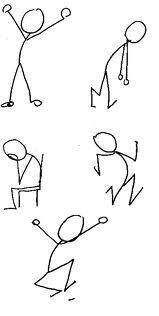 Initially, I was going to place this lesson in the training module about professional rehearsal.
But this lesson is very important to understand now — before you even begin to develop your own stand-up comedy material.
Background
Unlike what the term seems to imply, body language does not merely encompass hand gestures, head movements and facial expressions, but rather ALL visible and audible aspects of verbal communication, such as those provided in the lesson on natural expressive comedy traits.
It doesn’t matter if you are in a casual conversation with friends or you are standing before an audience on the stand-up comedy stage…
As mentioned before, most of what you have to express to an audience (93%) is communicated through what your audience can see and hear, as opposed to the actual words that you use.
Let me put this another way…
Part 2
What Really Happens When You Speak To Others
When you communicate verbally in ANY environment or situation, there are actually 3 channels of communication that take place simultaneously:
1. The words that you are using to communicate what it is you want to say
2. What your body movements, hand gestures, facial expressions, posture, etc. are communicating (relative to the words you are using)
3. What your voice inflection, pitch and tone variations are communicating (again, relative to the words you are using)
When these 3 channels of verbal communication are in sync or in alignment, your audience accepts that what you have to say is genuine and they will hang on your every word.
This is called body language alignment.
But when these 3 channels of verbal communication are not in sync or in alignment, your audience will not accept what you are saying as genuine.
This is called body language misalignment.
And more importantly, this misalignment can severely suppress the laughter response that you get from an audience — even if you actually have great comedy material to deliver.
Let me explain this further with an easy example that everyone has been exposed to…
Part 3
Body Language Alignment Reveals The Truth (Or Lack Of It)
Everyone has been in a conversation with someone and knew that the person they were talking to was lying to them, even though the actual words they were saying didn’t necessarily reveal the person was lying.
It’s often described as a “gut feeling” and can’t really be described — people just seem to “know” a person is lying to them.
Well, that “gut feeling” that someone is lying to you is actually your subconscious mind recognizing that what the person is saying (the words) don’t properly match up with what their body, face and voice are communicating.
In other words, their body language was not in alignment, revealing the lie.
The exact same thing happens on the stand-up comedy stage.
When a comedian’s words don’t match their body, face and voice expression of those words…
Audiences know immediately on a conscious or subconscious level that what the comedian is saying is not being genuine and they are simply in the process of being “joked”.
The moment that happens…
The audience becomes on guard and starts to focus on figuring out the angle of the “joke” as opposed to being focused on what the comedian has to say and being genuinely surprised when the comedian gets to a punchline.
The result — limited or no laughter, even if the comedy material was hilarious (provided it was delivered with the proper body language aspects in alignment).
Part 4
Reasons For Body Language Misalignment
There are 3 primary reasons that body language misalignment happens when a comedian is delivering their stand-up comedy material on stage:
1. The comedian is using a fabricated topic, subject or “premise” as the foundation of their “jokes” or comedy material.
In other words, they have made the conscious decision to try to “figure out” what may or may not be funny to an audience — usually by “writing” material (in the literal sense) for which they have no real interest or personal feelings about.
Then, they merely try to recite memorized words and sentences when they stand before an audience.
2. The comedian chose to “write” fabricated punchlines, with a “fabricated” angle, approach, perspective or point of view instead of reacting genuinely to what they have to say and express using their own sense of humor.
Then they are shocked when material that “reads” funny on paper flops on stage.
3. The comedian did not professionally rehearse their comedy material in order to cement the alignment of their natural expressive comedy traits with what they have to say to an audience in a genuine way.
Once again, this is yet another example of why one dimensional “writing” tends to flop big time in a three dimensional performing art.
Needless to say, body language alignment is a very big deal if your goal is to develop and deliver headliner level stand-up comedy material.
Part 5
Are You Saying My Stand-up Comedy Material Needs To Be 100% Truthful?
No, not at all.
But when you deliver your stand-up comedy material, what you say and express on stage needs to perceived as 100% genuine by your audience in order to generate maximum laughter response.
There’s a big difference between being 100% truthful and being 100% genuine when you speak, especially when humor is involved.
Think of it this way…
Let’s say you are in a conversation with friends and you start talking about one of your crazy relatives (mom, dad, aunt, uncle, brother, etc.) and you start talking about the subject of quirky things they used to do or say when you were a kid.
Are you going to exaggerate what you have to say and express about that relative and their quirks?
Yes, you probably will.
Will everything you have to say about your relative be absolutely 100% truthful?
Probably not.
But will everything you have to say about that relative be expressed genuinely, reflecting your own unique sense of humor and outlook on life around you?
Yes, it will.
And guess what? Your body language will be in alignment and laughter will occur as you are expressing yourself in your own natural and genuine way.
Wrap Up
Wrap Up
There’s absolutely NO rocket science involved when it comes to understanding body language alignment and why it is so important when it comes to generating big and frequent laughs as a comedian.
The important things to know are these:
As this course moves along, it should be obvious you aren’t going to be “writing” anything in the literal sense.
What you will be doing is:
1. You will be selecting things that you do want to talk about and express to an audience that you CAN easily react to using your own natural sense of humor.
2. You will be skillfully structuring what you want to say and express to an audience in order to generate headliner level laughter levels, right from the beginning.
3. You will learn how to professionally rehearse your stand-up comedy material in order to make sure that what you have to say is in alignment with your body language.
4. And you will learn how to evaluate and adjust your performances for improvement, which minimizes the number of times you have to deliver your comedy material on stage before it is generating the maximum laughter that it can generate.
More than anything, I don’t want you to be just another comedian.
I want you to be skilled comedy technician who know not only knows what works and why, but also knows why things don’t work as they should.